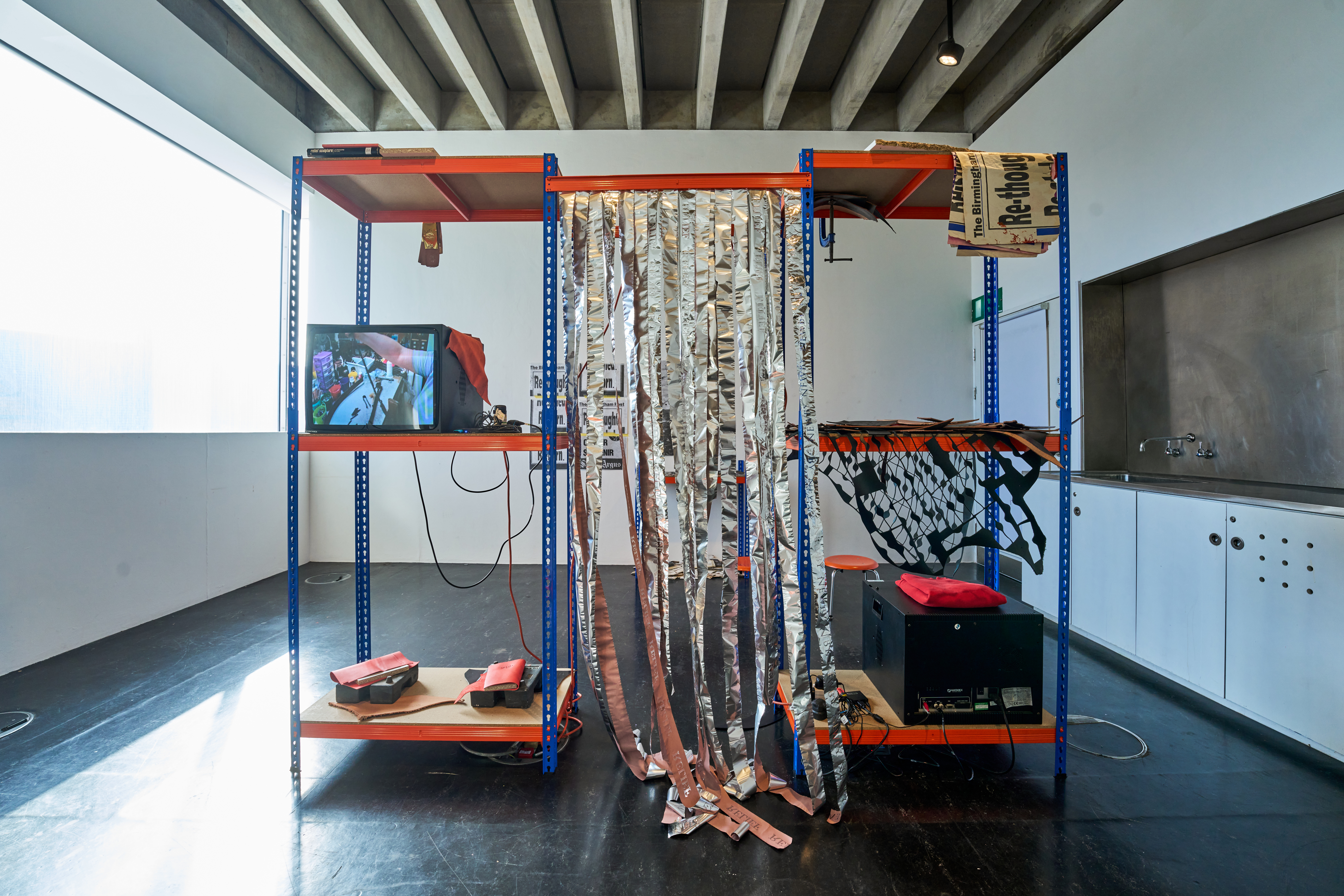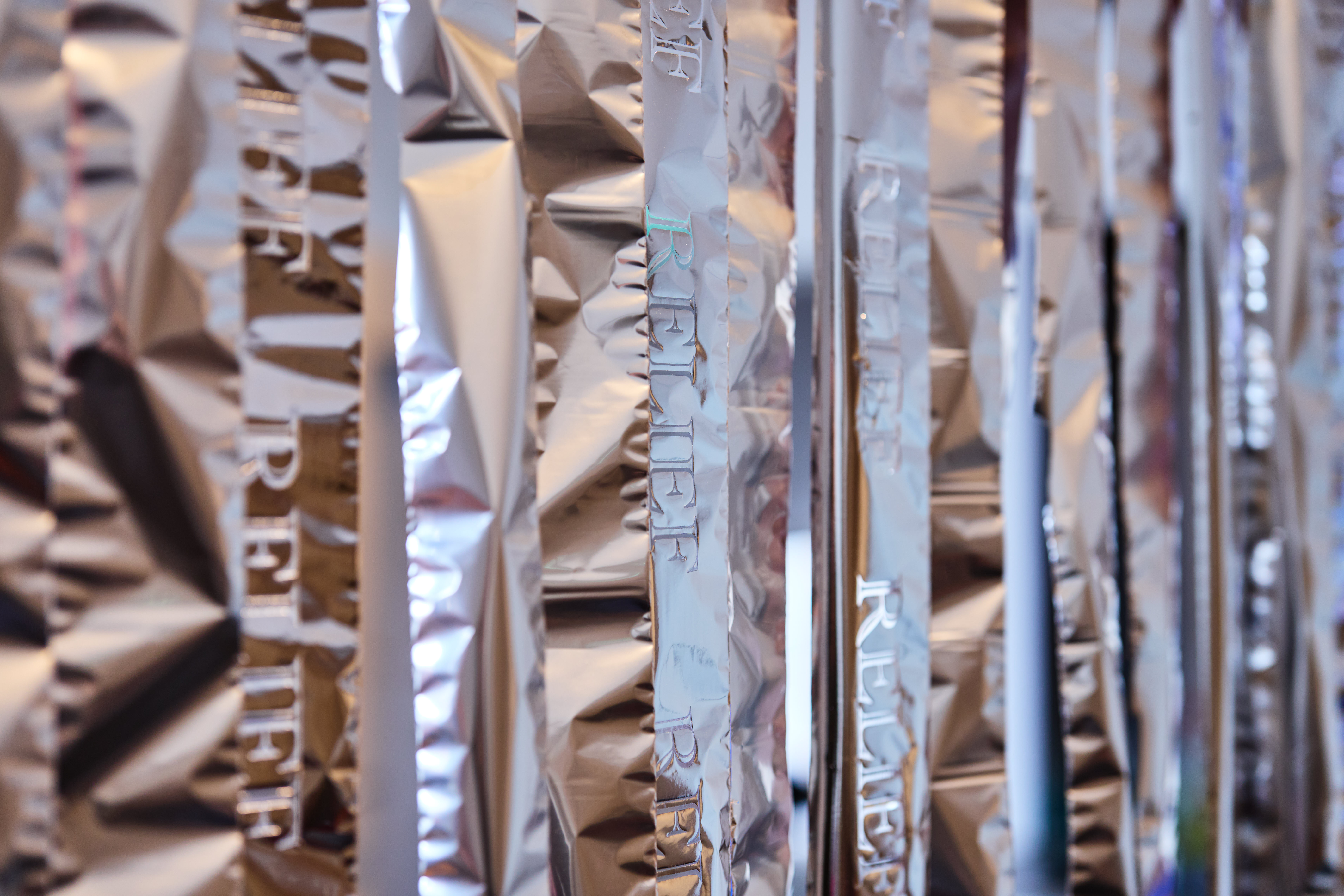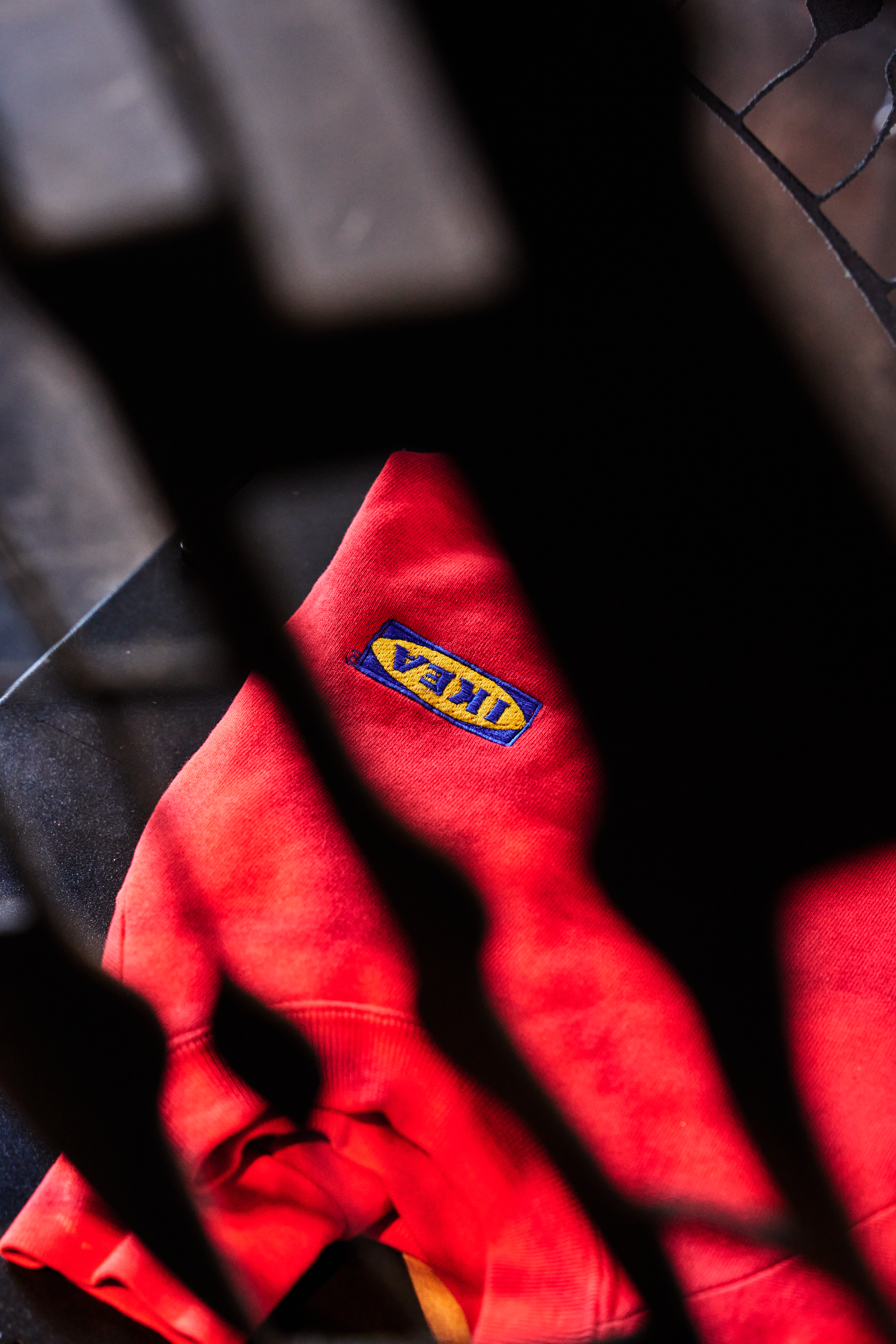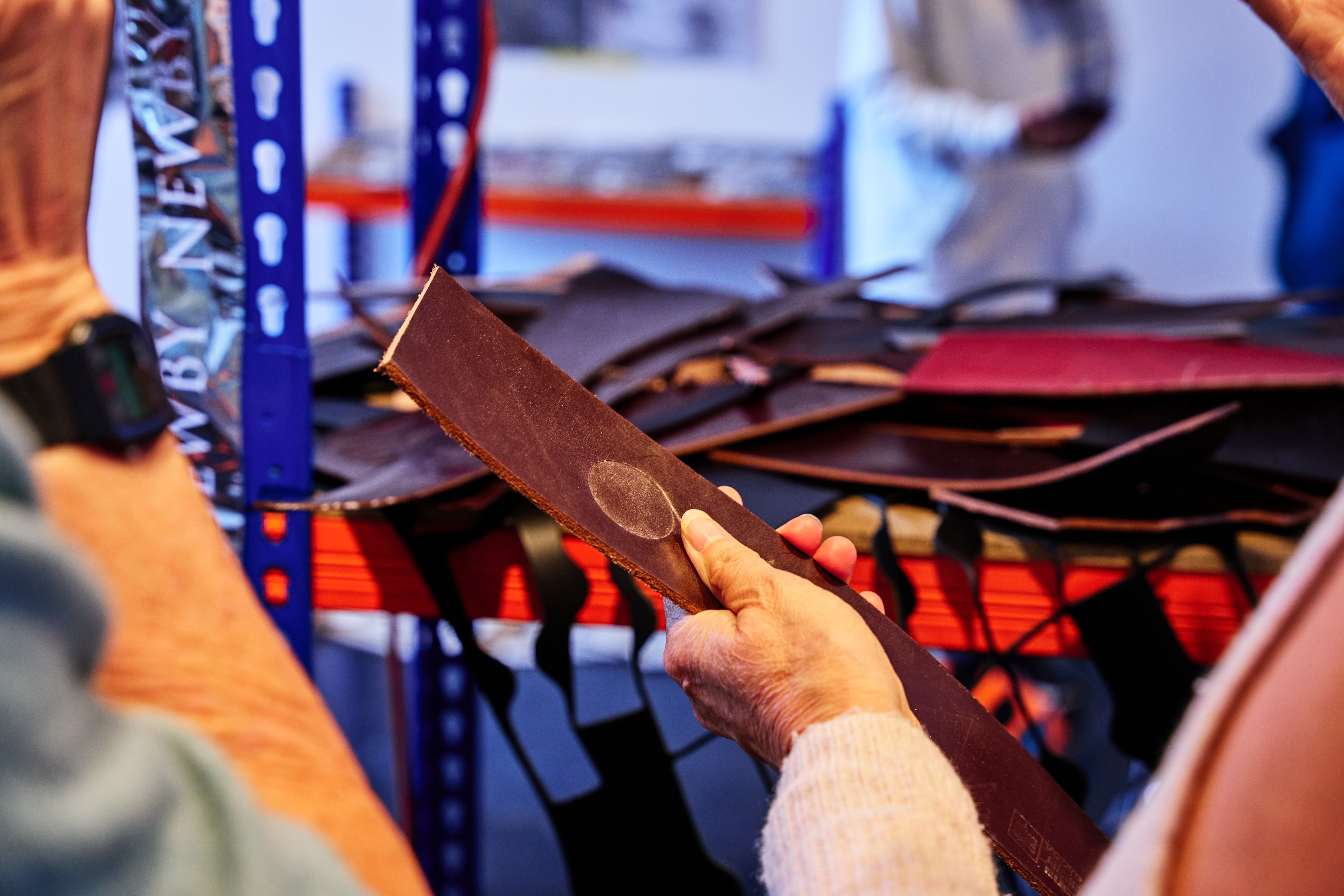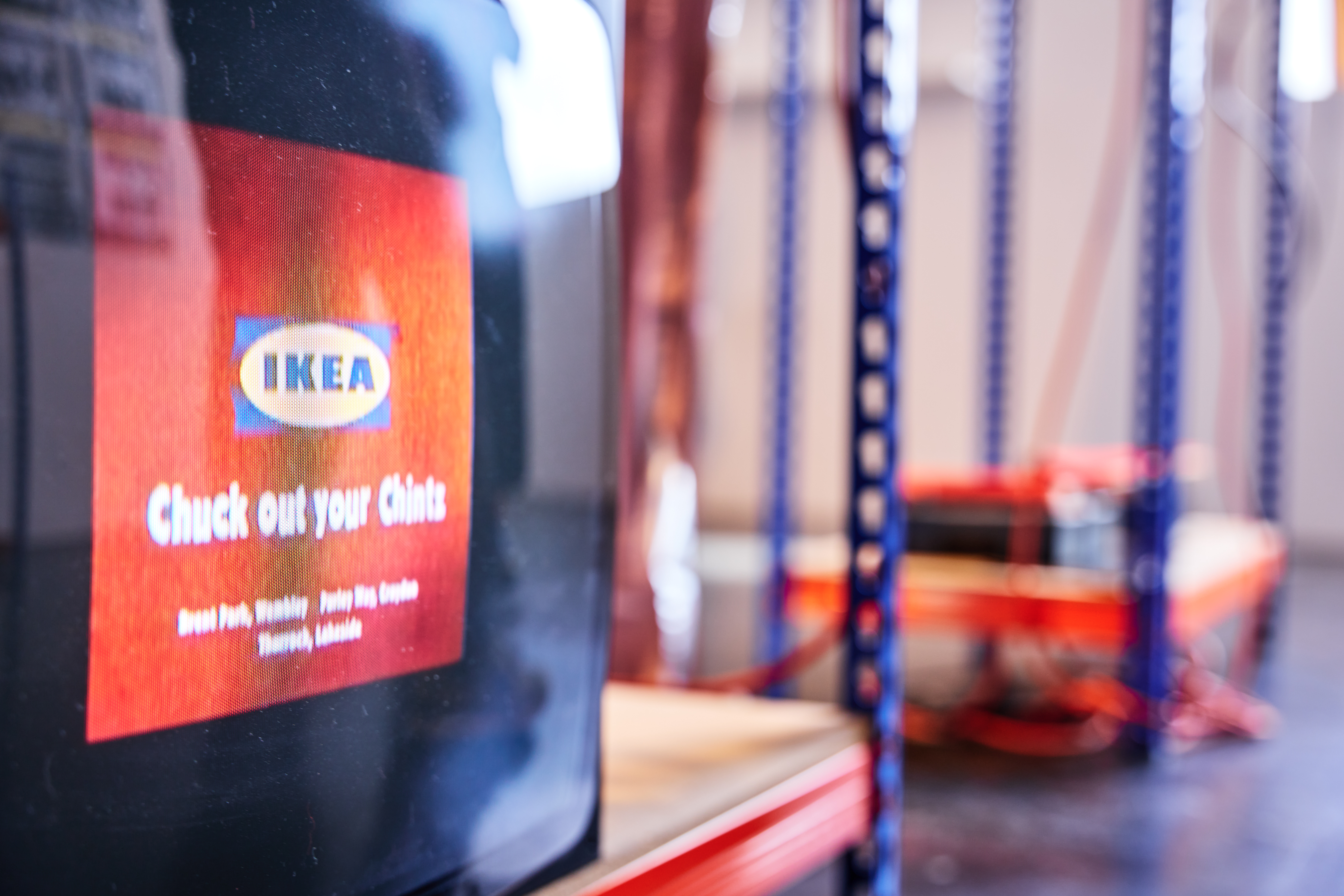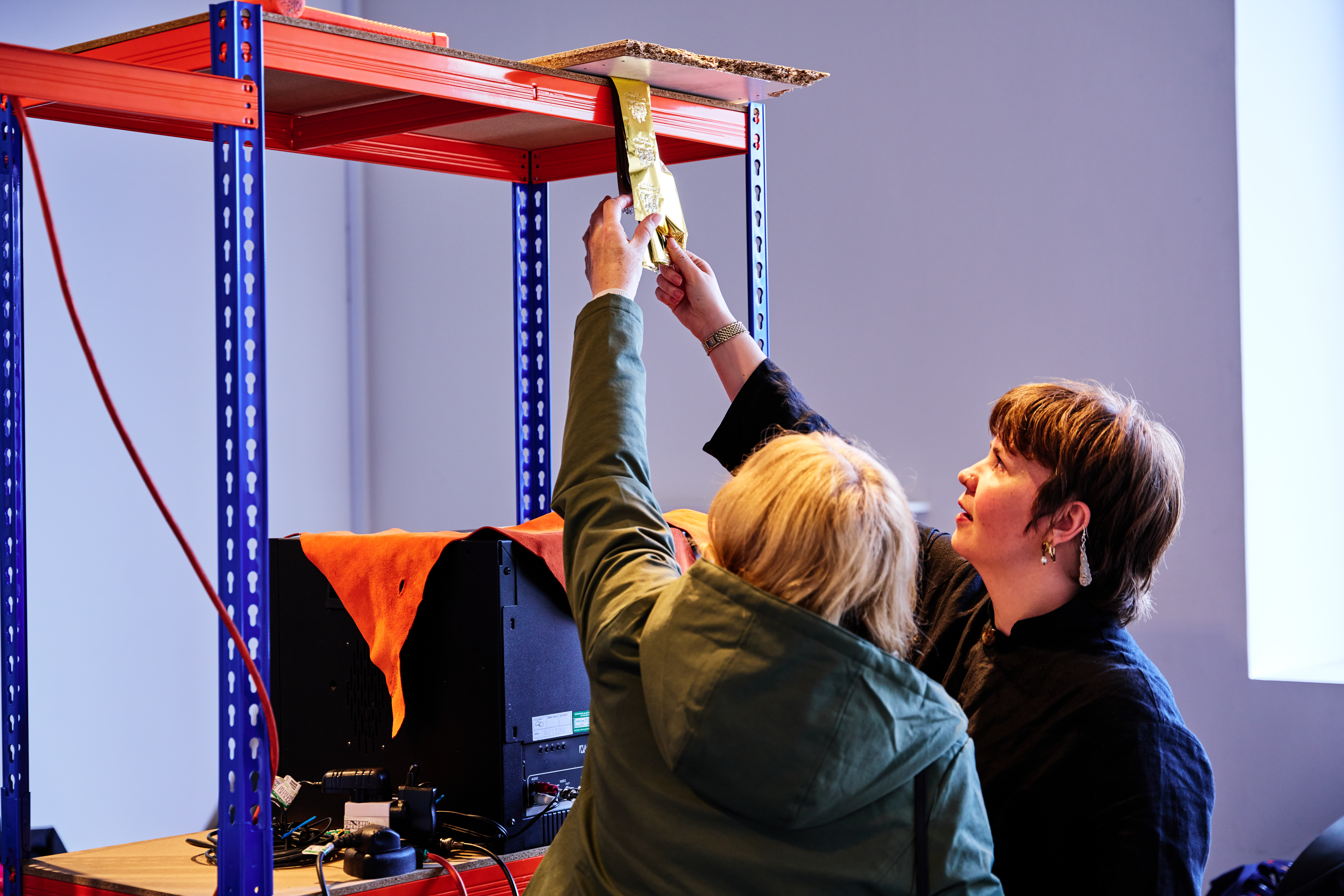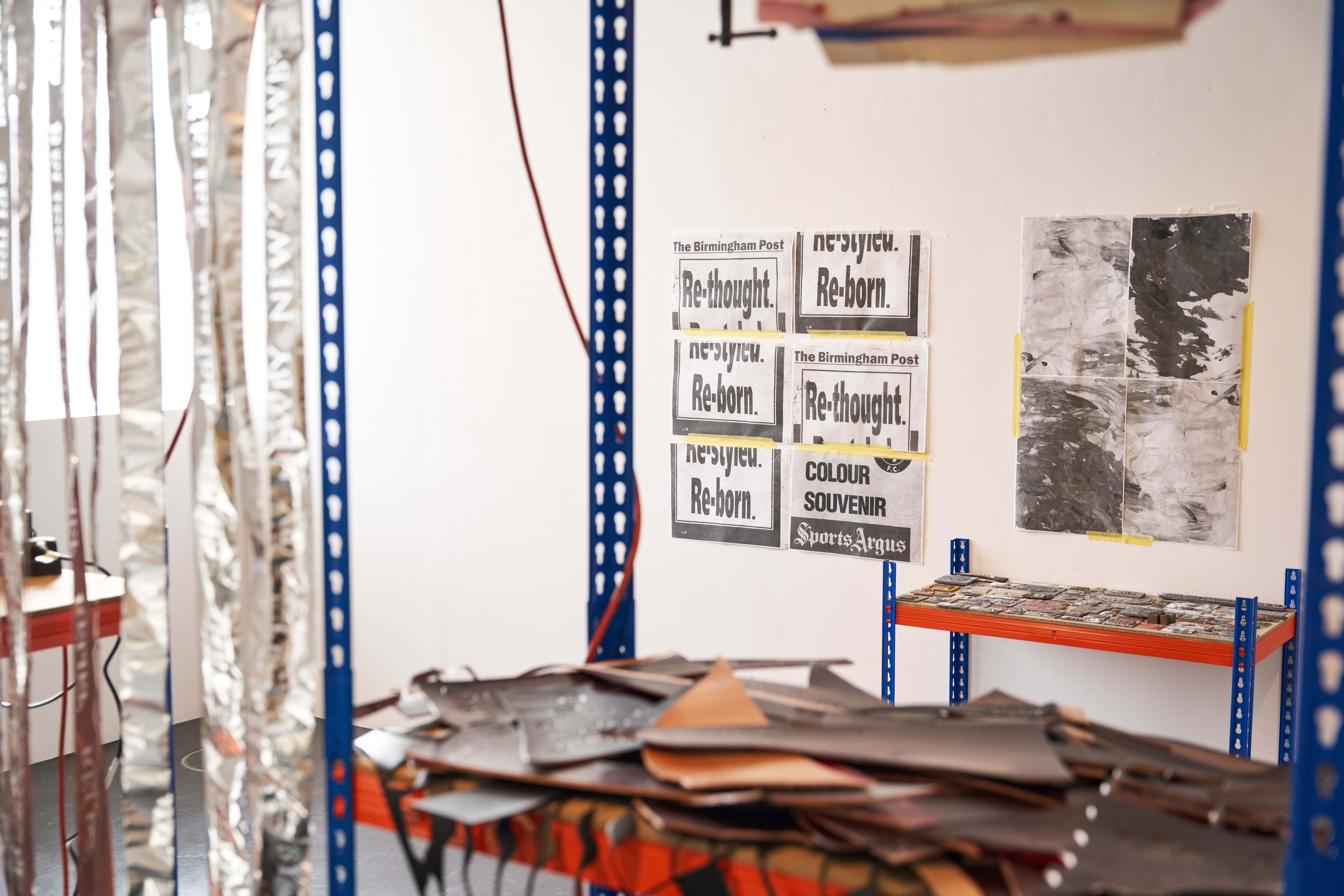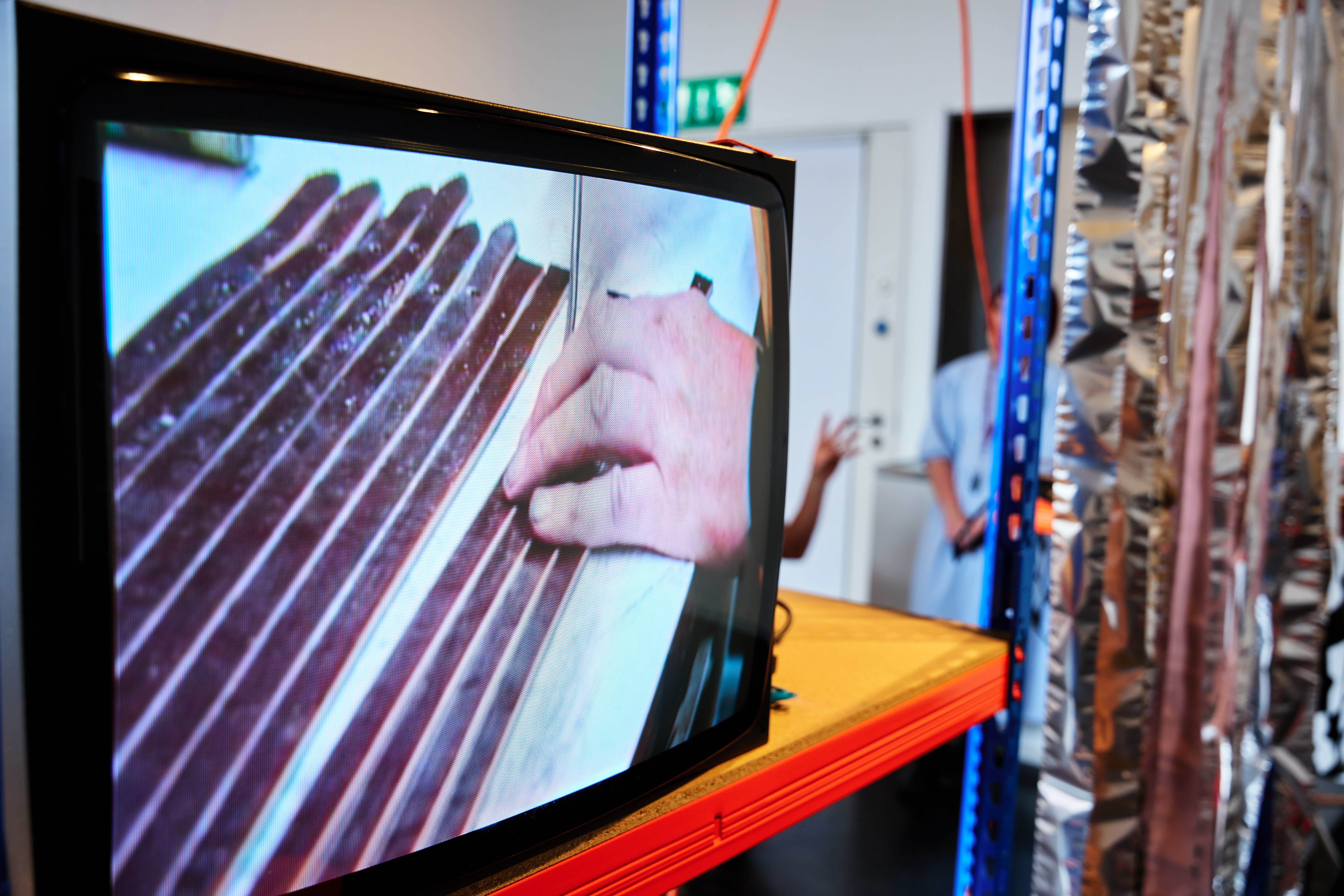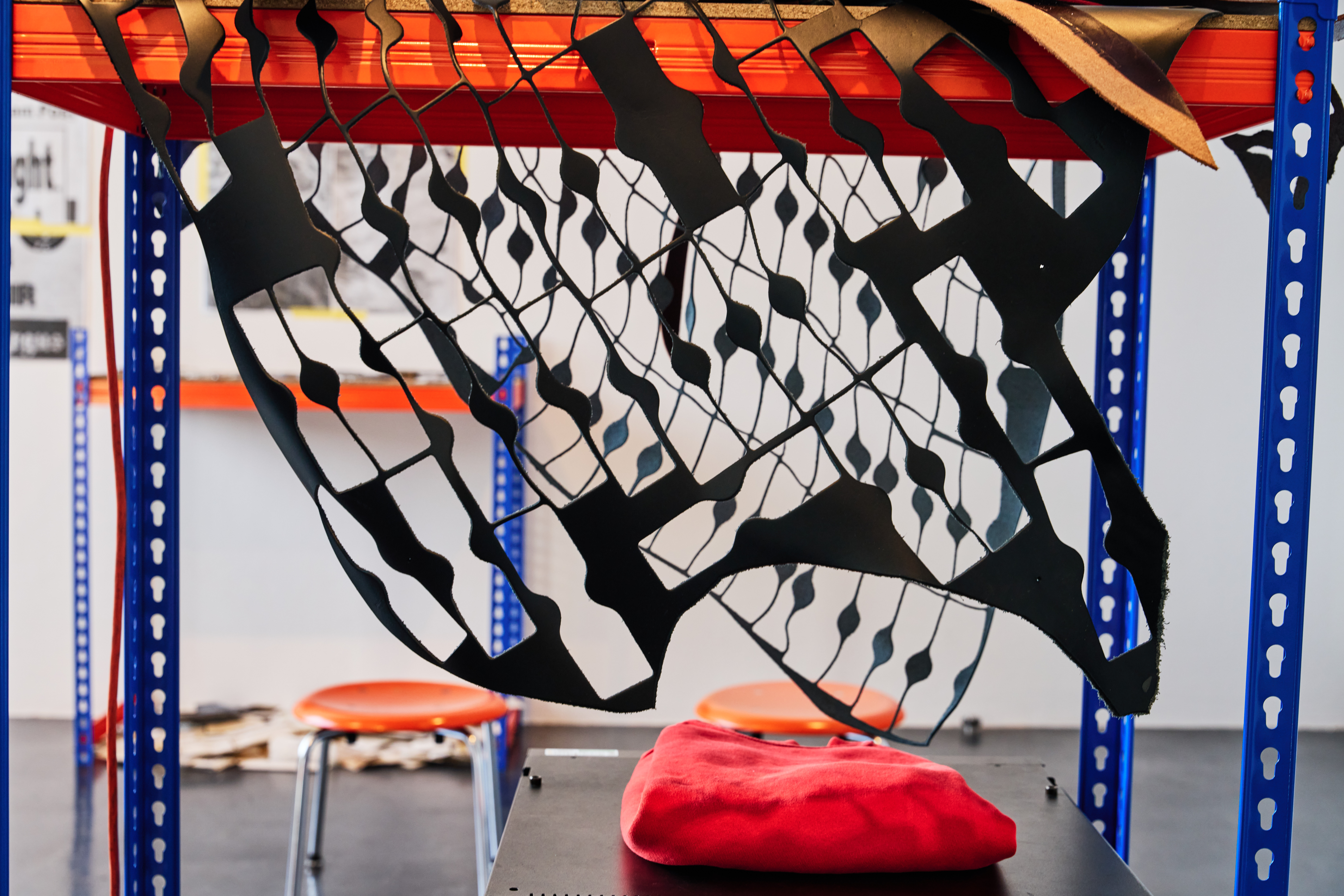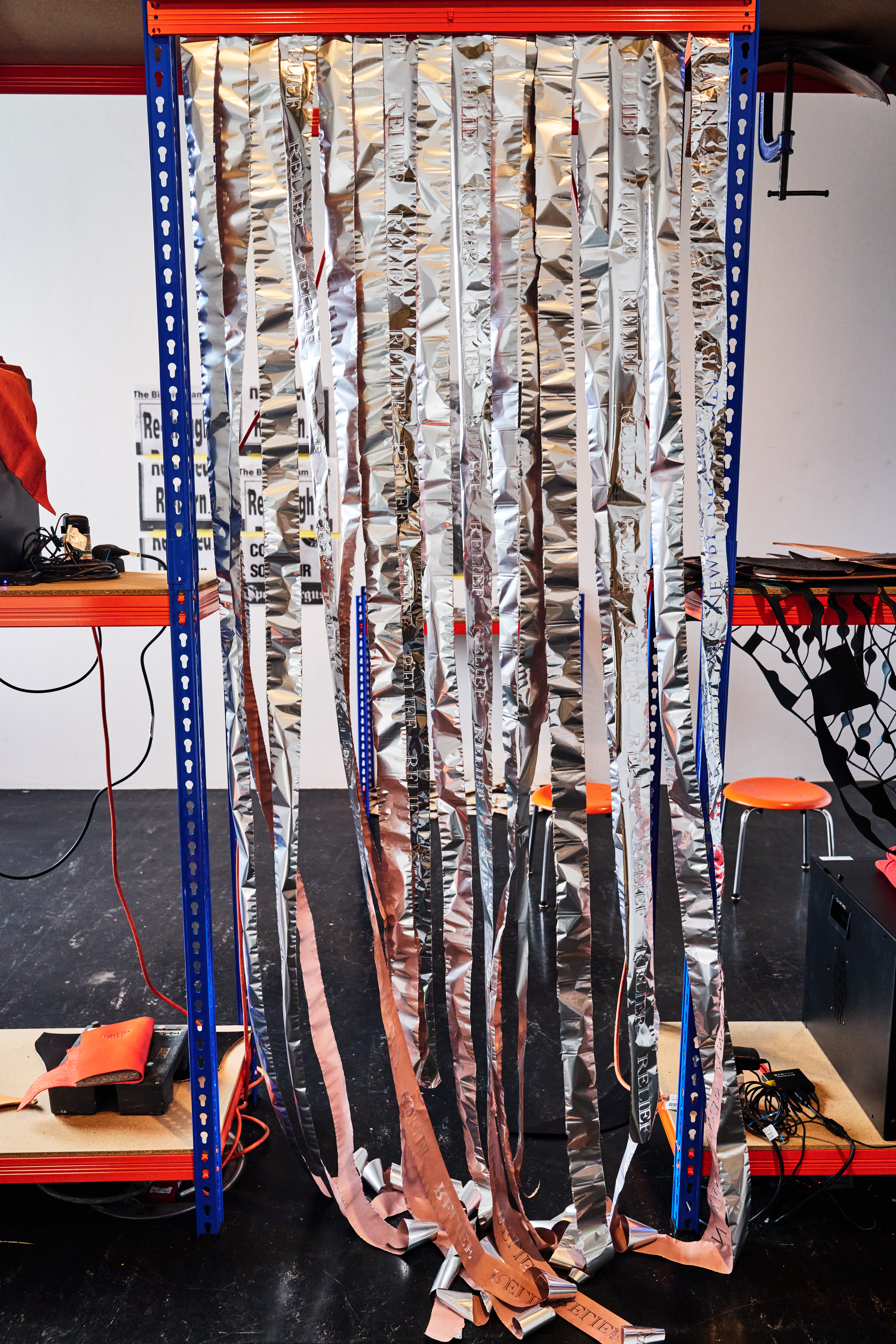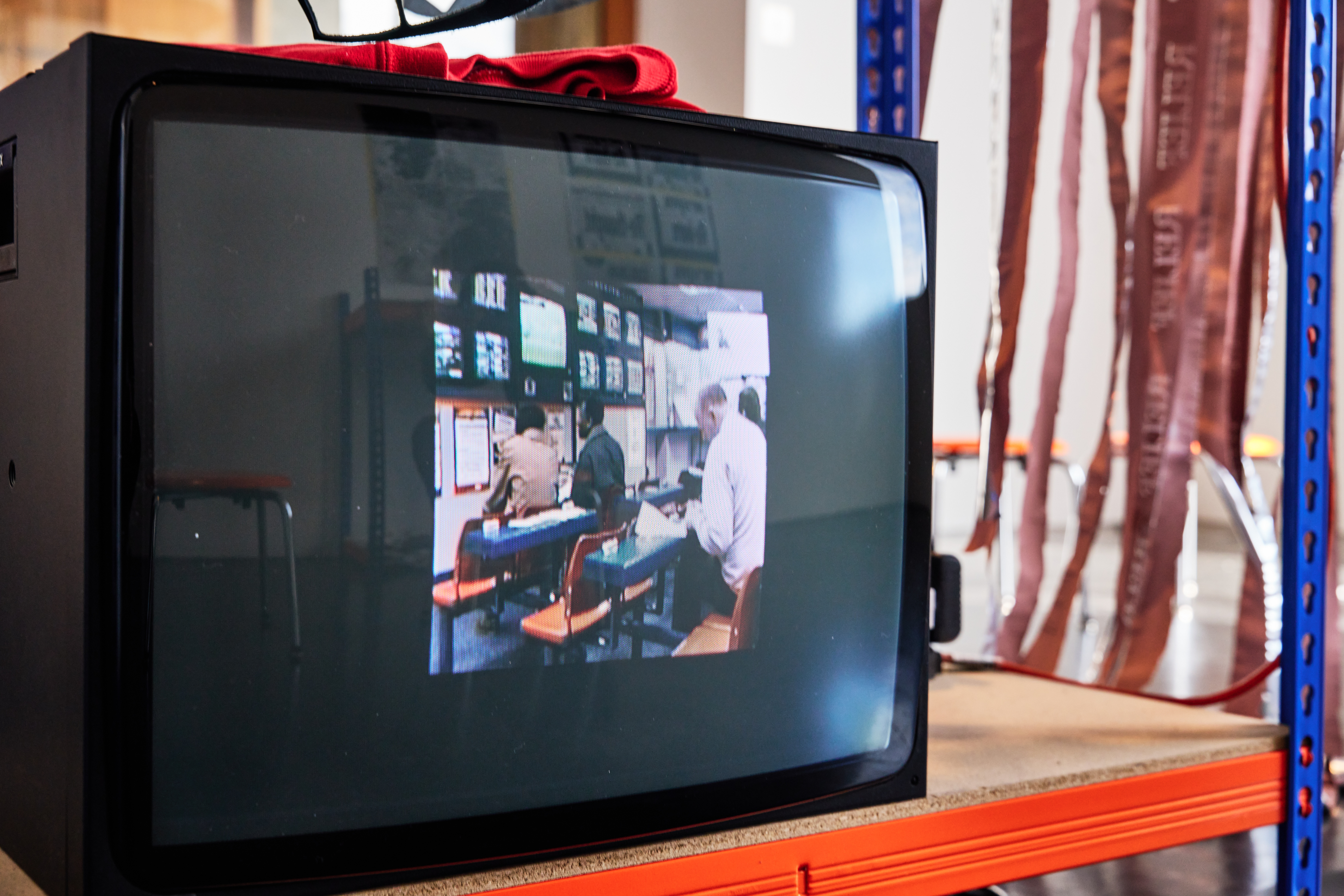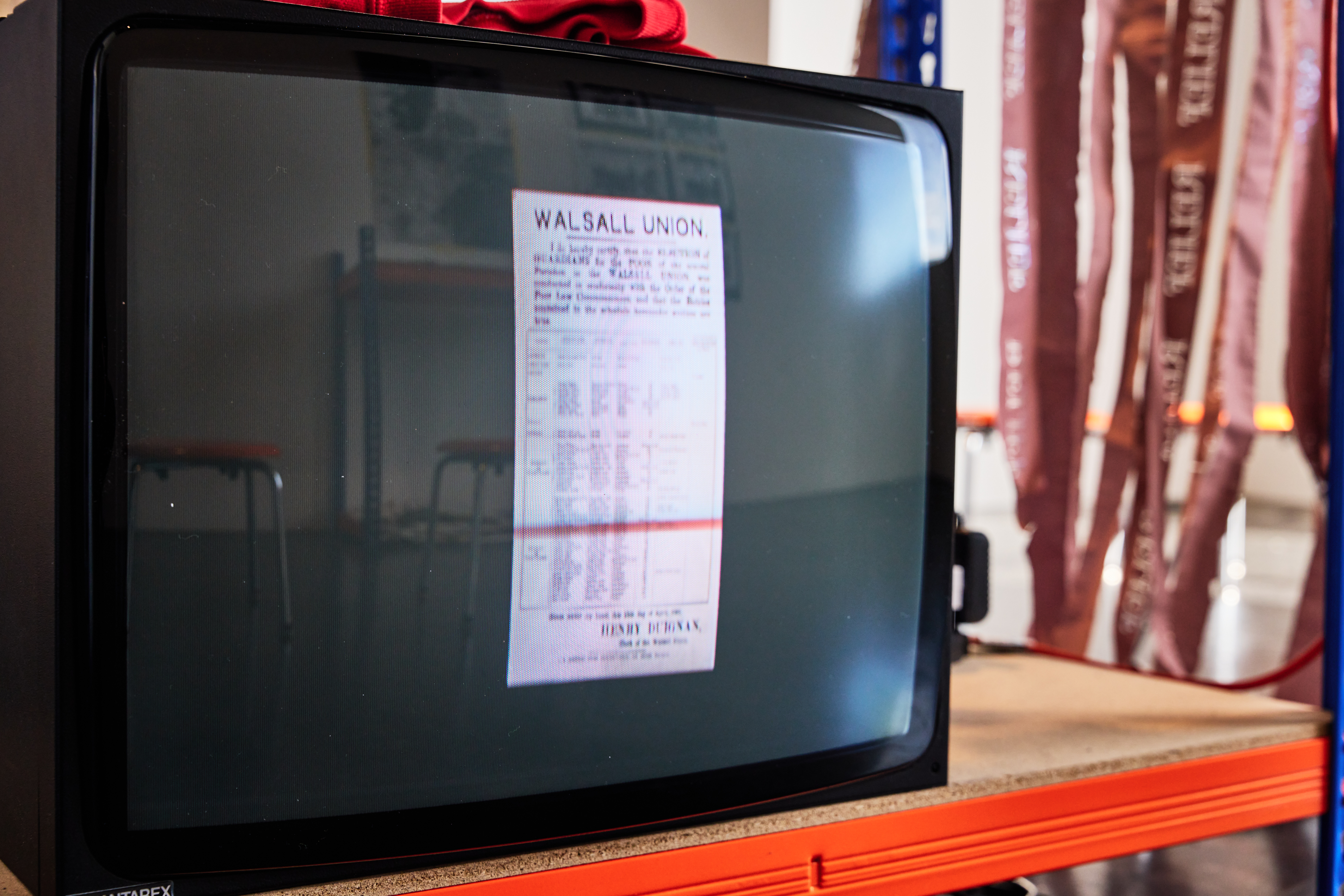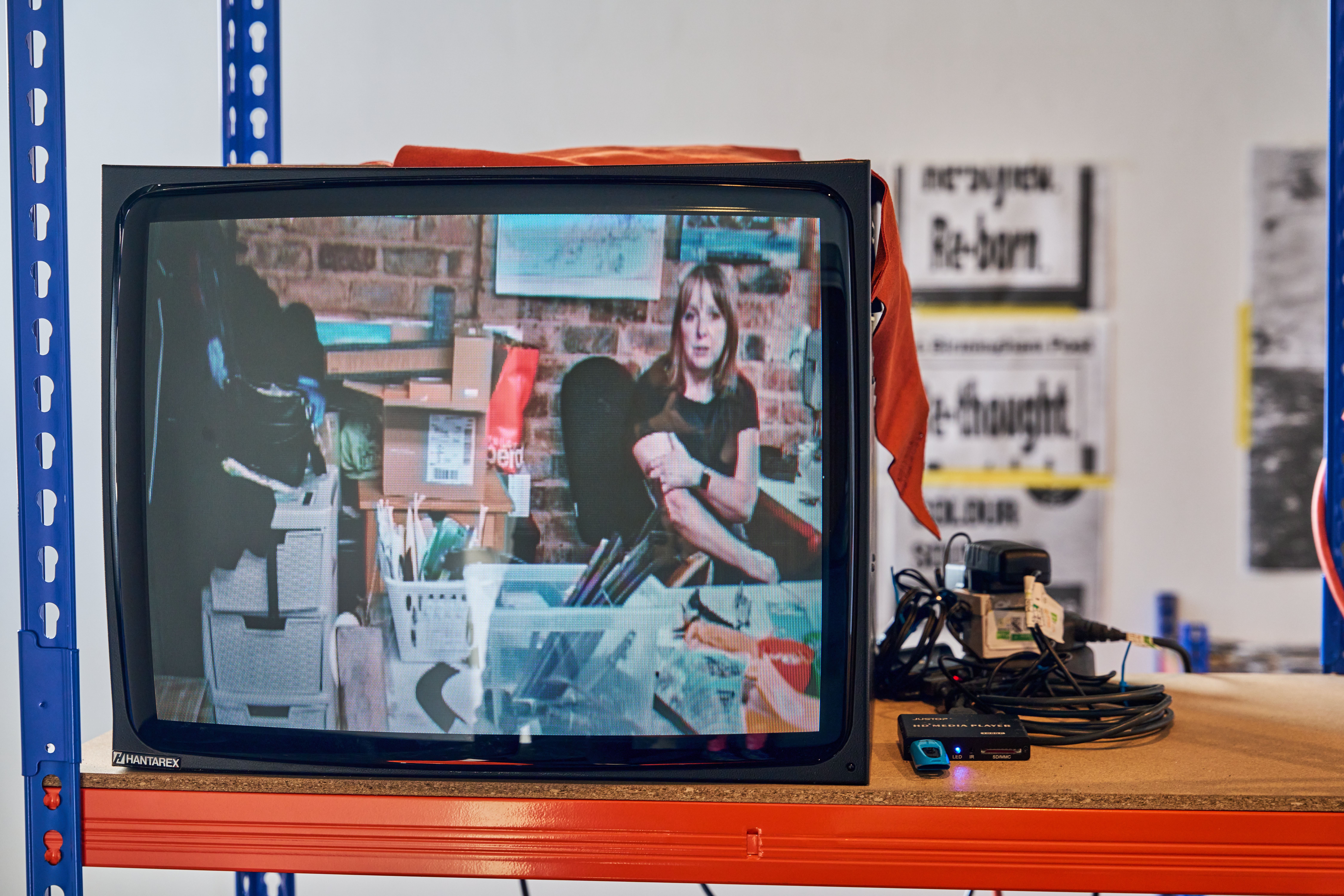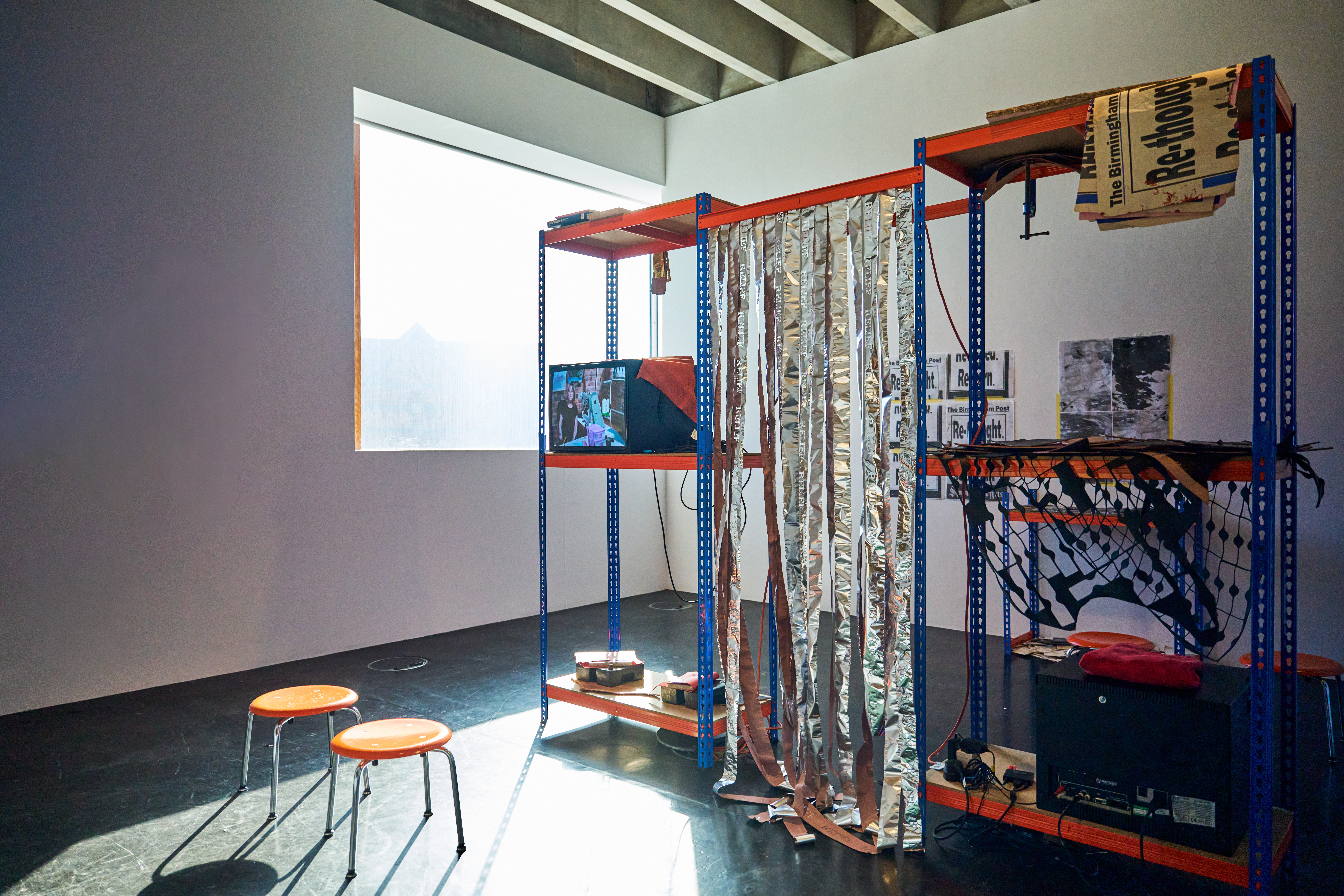

Installation at New Art Gallery Walsall. October. 2025. Image Credit: Emotive Eye
Relief
In progress works
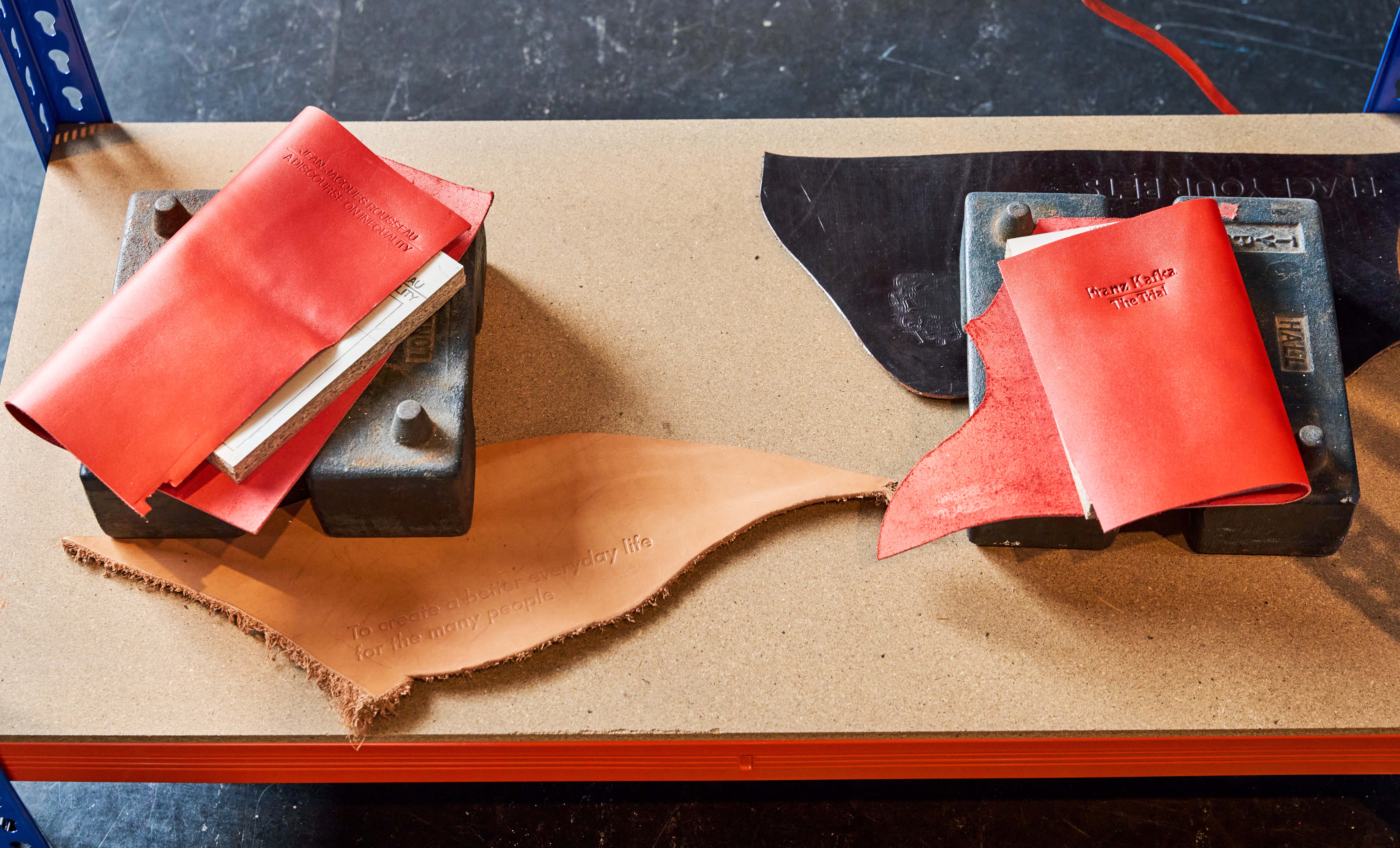
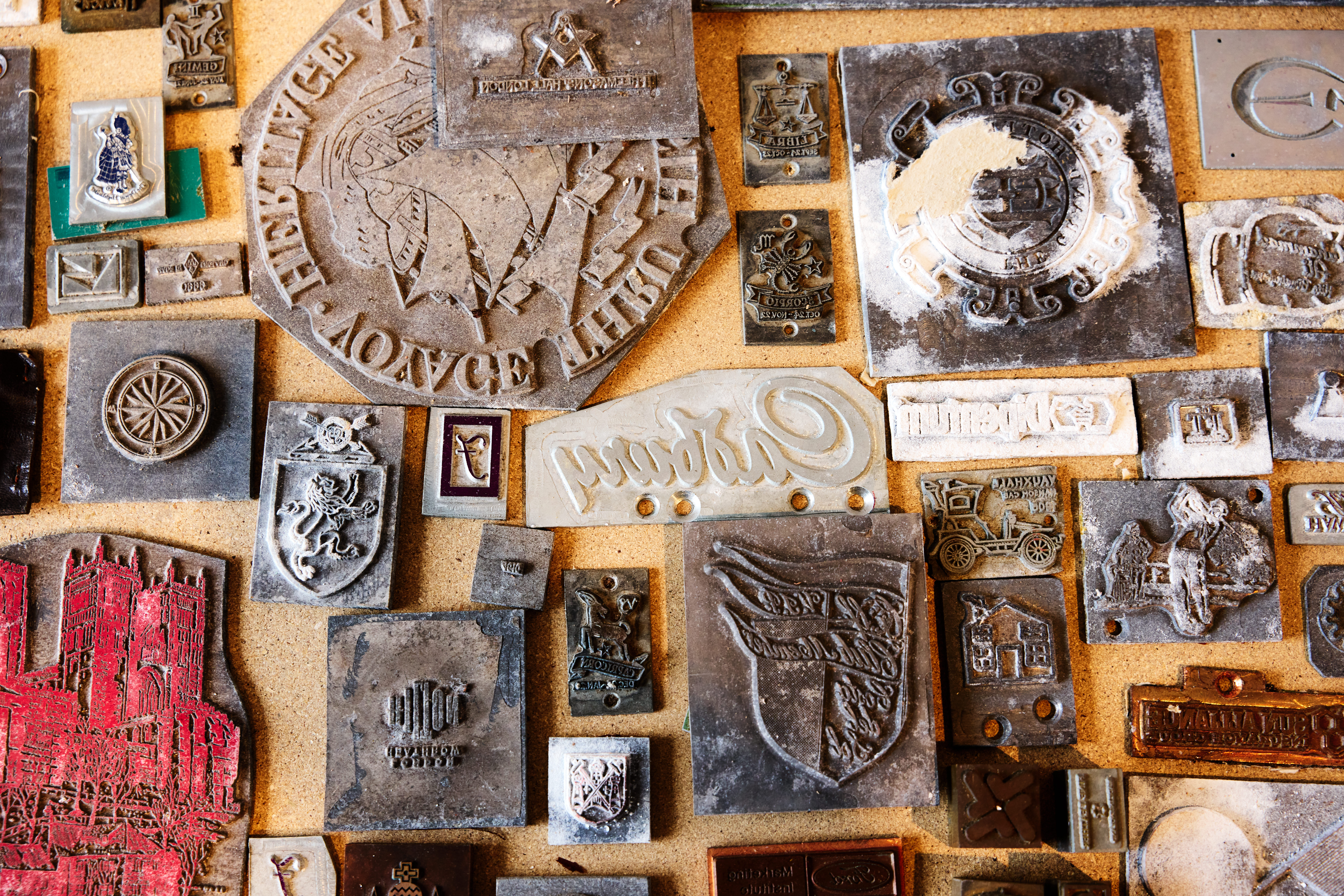
Embossed leather, moving-image, IKEA chipboard, metal embossing stamps, silver and gold embossing foil, IKEA Jumper. Paper. G-clamps, weights and shelving system
2025 and ongoing
Supported by New Art Gallery Walsall Studio Residency
Relief is a long-term body of work and research expanding upon the concept of ‘relief’ as both an emotional coping mechanism and a creative act. It draws parallels between personal experiences of working-class life and grief, and the wider art-historical context of relief sculpture. Engaging with relief as a multifaceted process, emotionally, how we find release, and materially, through sculptural and industrial forms, the work explores how we construct our own ‘reliefs’, both emotionally and physically.
The in-progress works were developed during a residency at The New Art Gallery Walsall, the artworks contrast personal grief with broader working-class struggles, challenging narratives around industrial histories, particularly Walsall’s leather industry and the decline of the high street, while interrogating the ‘industries’ that have replaced these trades.
Relief delves into how my family and others in working-class communities seek relief in myriad ways, while framing the historical exploitation and imperial practices tied to the industries these towns were built upon. Focusing on her hometown Walsall, once defined by its leather industry and local identity, now often romanticised, the work reveals how such histories can obscure the exploitation of workers and their role in Empire building, alongside expanding on the histories of power embedded in relief, from state propaganda to corporate branding.
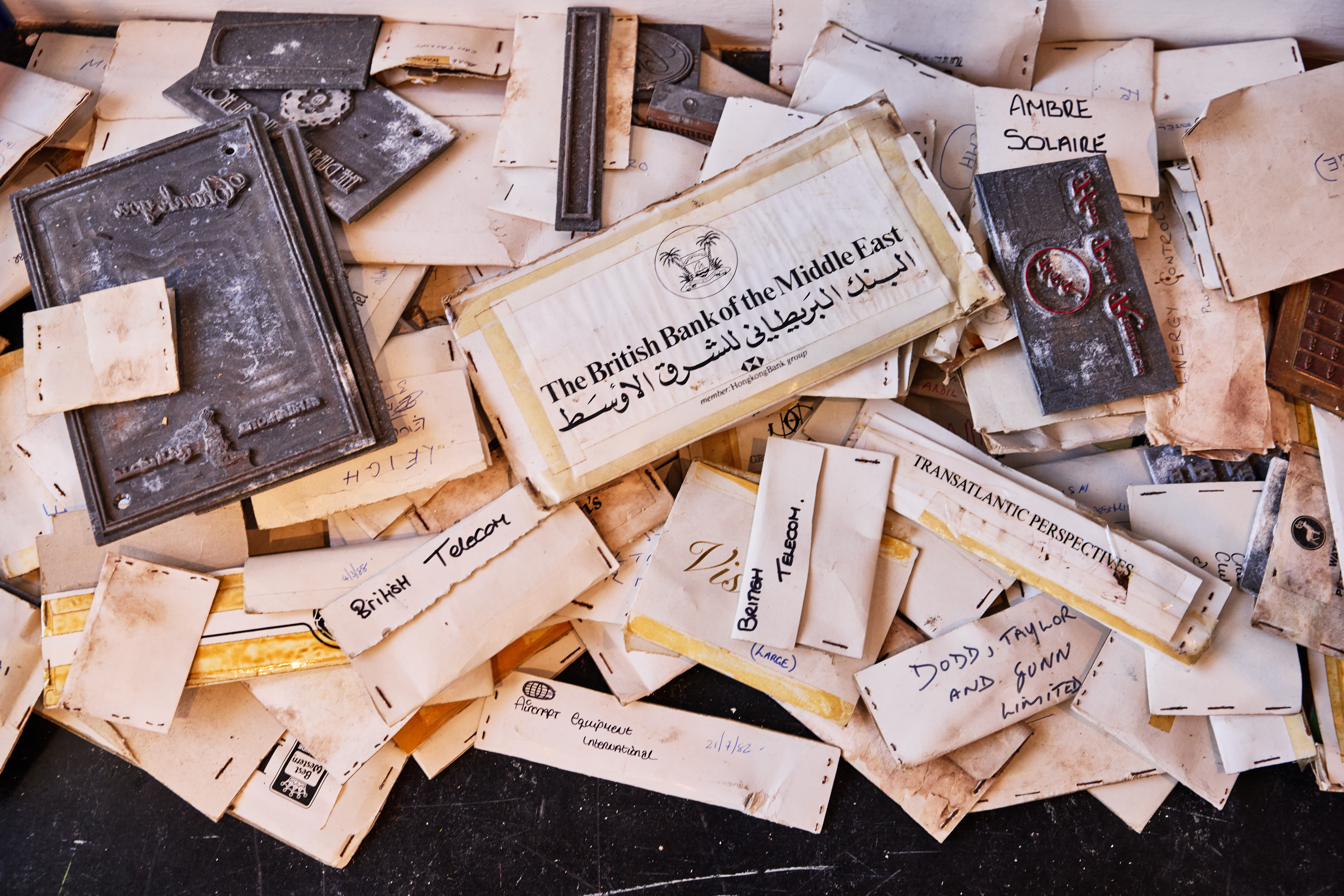
Drawing on connections with Hadfield Bridleworks, Walsall Gold Blockers, Sedgwick’s Leather and research at Walsall Archives, the residency culminated in moving-image works, sculptures, and writings that explore the many meanings of relief, from the physical act of embossing and blocking to the emotional and collective ways we seek release or relief.

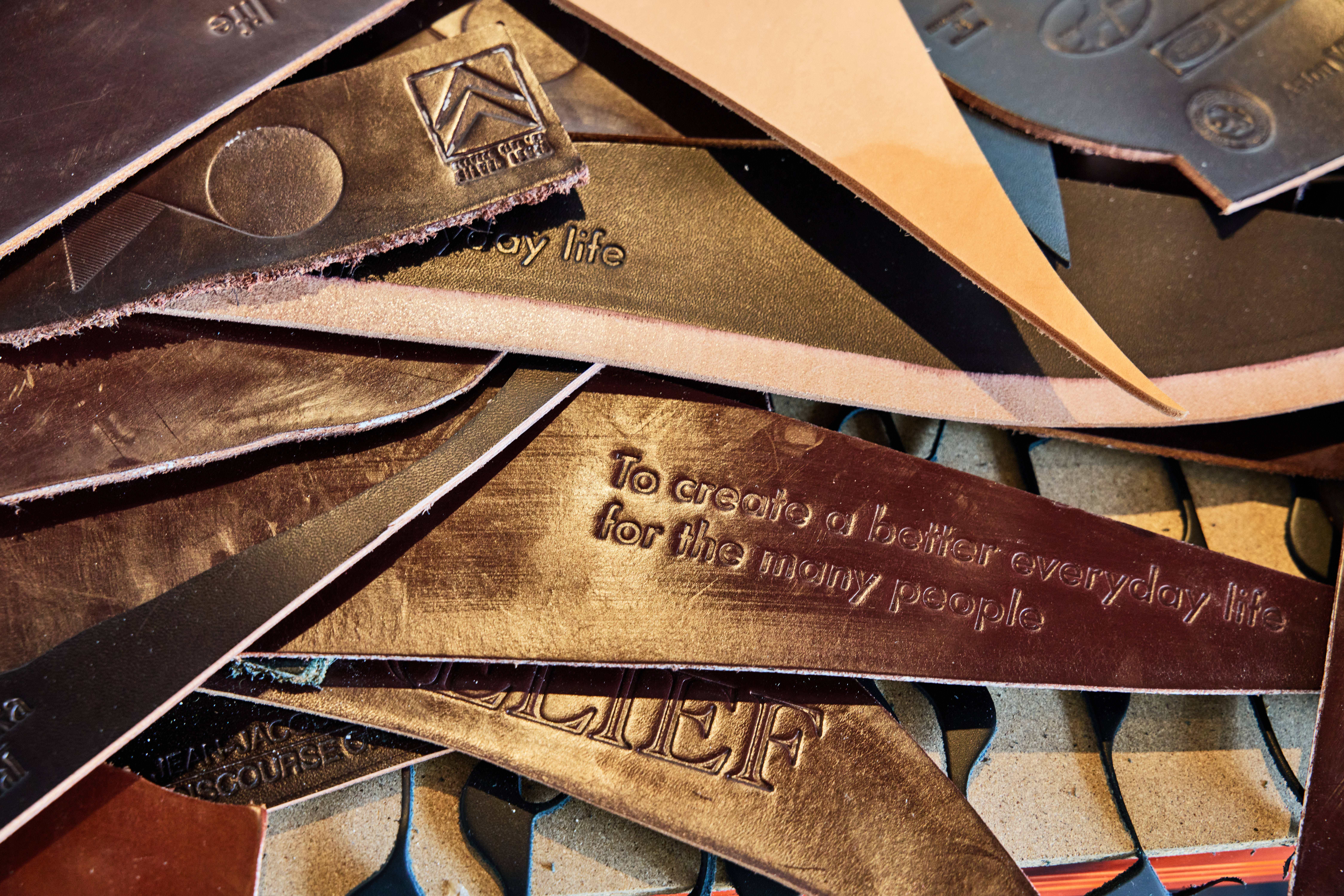
Working with leather embossing and gold-blocking stamps made from corporate slogans of William Hill, where her dad worked on Walsall High Street, and IKEA (Junction 9), where her mom worked in the 1990s, she reimagines these impressions as sites of memory and labour. They have incorporated redundant corporate dies from Hadfield’s, once used to mark prestige onto surfaces and reworked them to question how corporations shape identity and belonging.
The works reflect on how labour, craft, and industry leave lasting impressions on place and people, entwined in heritage narratives and the fictions corporations tell, while asking how families and communities continue to find their own forms of relief amid economic precarity, shifting high streets, and global pressures. Relief moves between the personal and local to the global, tracing how these interconnected forces shape everyday lives.
Thanks to:
NAGW Zoë Lippett, Deborah Robinson, Simon Bloor, Jeremy Hunt, Hannah Anderson, Kavita Kumari and all the security staff and cleaners.
Hadfield Bridleworks: Deborah Ray, Lorraine Shail, Mick Citrullo, Donna Riley, Jan Mills, Barry Rotchell
Walsall Goldblockers: Robert Hulme
Sedgewick’s & co leatherworks: Mark Abraham and Jo Hall
Walsall Archives: Catherine Dickens
Thanks to all who attended the open studio event